



How to Track Blood Trails at Night: Best Colored Hunting Flashlights
Rising efforts in predator and wild hog management nationwide have drawn more outdoor enthusiasts into the forest after sunset than in previous years. Even regular daytime deer hunters face that common, tense situation: you take a well-aimed shot just as legal light ends. By the time you descend from your tree stand and gather your gear, the woods have gone completely dark. The line between a clean recovery and a lost animal now rests entirely on what you brought in your pack. Your choices here make all the difference.
Using a basic, weak store-bought light to follow a blood trail leads quickly to a failed evening. As the cold sets in and the trees grow dense, you need focused tools to pick up small signs on the ground. To find your animal efficiently and ethically, invest in a quality colored hunting flashlight. This guide covers the visual science of light wavelengths, how biological fluids respond to different colors, and which tools you need for success after dark.
The Visual Science Behind a Blood Tracking Light
When you step into dark woods, the way artificial beams reflect off surfaces completely changes human perception. Different wavelengths interact with biological fluids, dead leaves, and damp soil in highly specific ways. Understanding these physical reactions determines how effectively you can recover your game without straining your eyes.
The Problem with Traditional White Beams
Many beginners assume the brightest white light available is always the best tool for the job. While high-lumen white output is great for broad field illumination, it often creates significant problems during a close-quarters search. A standard hunting flashlight running at 1,500 lumens will reflect harshly off wet vegetation, damp dirt, and shiny leaves.
That intense reflection causes severe glare, which leads quickly to eye fatigue. Bright white light also tends to wash out subtle color differences. A fresh drop of red fluid can easily blend into the brown and red tones of autumn oak leaves when lit with a pure white beam. You absolutely need a white light for general navigation, but relying on it entirely for a ground-level search will slow you down and increase the chances of missing critical signs.
Selecting the Right Output Color
Choosing the correct beam wavelength can transform a tiny, nearly invisible drop of fluid into a clearly visible marker on the ground. Different colors serve completely different functions, from preserving your natural night vision to making biological material stand out sharply against the brush. You need to match the beam to your specific environment.
The Tactical Advantage of a Red Hunting Light
There is a common misconception in the hunting community that red light makes blood glow. This is physically incorrect. Because blood is red, shining a red beam on it actually washes it out, causing drops to darken and blend into the dirt. Red output should never be your primary blood tracking light.
That said, a red hunting light is a critical tool during the earlier phases of a night hunt. Red light preserves your natural night vision and is practically invisible to many game animals, including deer and coyotes. It lets you climb out of your blind, gather your equipment, and walk quietly to the initial hit site without spooking nearby animals or blinding your hunting partners.
Creating Contrast with a Green Hunting Light
For many experienced trackers, a green hunting light is the most effective option. The human eye is highly sensitive to the green wavelength, peaking around 555 nanometers. Because our eyes process this color so efficiently, a green beam appears intensely bright and cuts through darkness with exceptional clarity.
When you sweep a green beam across the forest floor, it creates a stark contrast. Dark red fluids stand out as deep, nearly black spots against illuminated green leaves and grass, making it significantly easier to follow a disrupted trail.
Rather than carrying multiple devices, modern hunters rely on integrated technology. The Fenix HT32 Hunting Flashlight is engineered specifically for this scenario. It features dedicated red and green LED outputs in a single unit. Use the red beam to approach the area quietly, then switch immediately to the green output to begin your search — making it a highly versatile colored hunting flashlight.

Hardware Requirements for a Night Hunting Light
The right color means little if your light fails in the middle of a tough, cold recovery. A serious hunter needs tools built to handle low temperatures, heavy rain, and the abuse of pushing through thick brush. Before heading out, check these key durability specs.
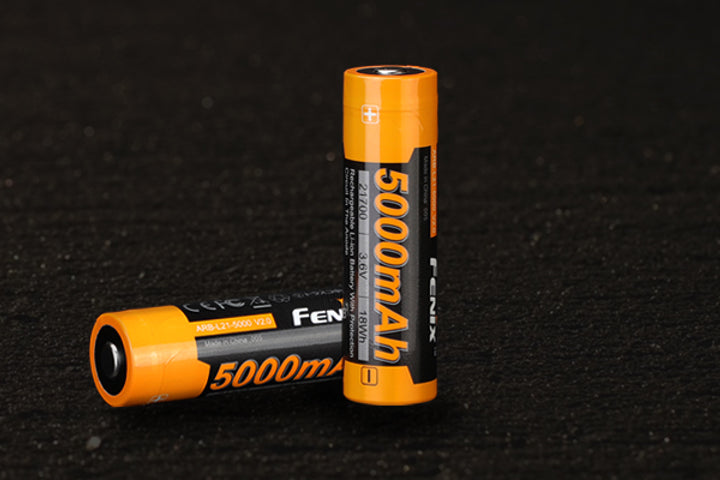
Battery Endurance: A demanding tracking job can easily run three to four hours. In temperatures below 20 degrees Fahrenheit, budget cells drain fast. Look for a unit with high-capacity power, such as a 5,000mAh 21700 rechargeable battery, to keep your light running until you reach your animal.
Long-Range Identification: Sometimes a trail goes cold and you need to scan a distant tree line or open field to see if the animal dropped in the open. A tool like the Fenix HT18R V2 Long-Range Hunting Flashlight is invaluable in this situation. Its extended beam distance lets you identify shapes across large fields without walking hundreds of extra yards.
Recoil Resistance and Waterproofing: If you mount your light to a rifle for hog hunting, the internal components must withstand violent recoil. Look for dual-spring battery compartments and an IP68 waterproof rating. If the light gets dropped in a creek during a pursuit, it needs to keep working.

Tactical Steps to Track Blood Trails in the Dark
Quality lighting gear is only the first step in successful game recovery. A disciplined search pattern prevents you from accidentally destroying vital signs and losing the trail. Combine your light with these systematic methods to locate your animal more efficiently.
Mark the Initial Impact Zone: Before turning on your blood tracking light, mentally note the exact tree or bush where the animal was standing when you took the shot. Walk straight to that spot and mark it with bright tape. This is your fixed starting point.
Scan Laterally, Not Just Down: Animals brush against tall grass, tree bark, and saplings as they run. Hold your beam at knee height and sweep slowly from side to side. A smear on a piece of brush is often much easier to spot than a drop absorbed by dark mud.
Use a Grid Search: If you lose the trail entirely, resist the urge to wander. Return to your last marked spot and use your night hunting light to walk an expanding circle or a systematic grid pattern. Move slowly; rushing through the dark destroys the very evidence you are trying to find.
Conclusion
Losing a wounded animal is the worst outcome a responsible hunter can face. Investing in a proper blood tracking light is a fundamental part of ethical hunting and respect for the game. Whether you are running predator control operations on a southern ranch or chasing late-season whitetails in freezing timber, your recovery rate depends heavily on your vision after sunset. A quality colored hunting flashlight gives you the visual advantage needed to find every sign on the ground. Tools like the Fenix HT32, with its multi-color versatility, and the Fenix HT18R V2, built for long-range field scanning, give you the best possible chance of a successful recovery. If you want to upgrade your nighttime gear and are not sure where to start, contact Fenix directly. Our expert team will help you find the right illumination tool for your next hunt.
FAQs
Q: Can a standard hunting flashlight help me track blood trails?
A: Yes, but a dedicated blood tracking light reduces harsh glare and creates much better contrast on wet vegetation.
Q: Why should I use a green hunting light in the woods?
A: Green light appears intensely bright to the human eye, making dark red fluids stand out sharply against the ground.
Q: Does a red hunting light make blood glow?
A: No, red light actually causes red fluid to blend in. Use it for stealthy navigation, not tracking.


