



Top 5 Features to Look for in a Professional Predator Hunting Flashlight in 2026
When getting ready for an evening outdoors
The line between a good catch and an annoying hike in the shadows often comes down to one basic tool: your flashlight. With technology moving ahead fast, the standard for what makes the best hunting flashlight has changed considerably. Simply having a strong glow is no longer enough. Today’s hunter needs precise targeting, quiet operation, and specialized light types designed to avoid alerting the sharp instincts of wild animals.
Key Takeaways
- Modern predator hunting flashlights require more than brightness. Precision, stealth, and specialized lighting are essential.
- Native red and green LEDs provide better performance than filtered white light by maintaining full brightness and range.
- TIR lens technology enables longer beam distance while keeping flashlights compact and lightweight.
- High-output flashlights with multiple brightness levels offer flexibility for different hunting situations.
- Durable construction, quiet operation, and reliable battery systems are critical for successful nighttime hunts.
A Legacy of Lighting Excellence
Before jumping into the details of current tools, it helps to know the people driving the technology. Since we started in 2001, we have grown into a leading company focused on researching, building, and providing portable lighting gear. Our products are now used in more than 100 countries and help over 10 million people worldwide.
From the shelves at Dick's Sporting Goods, REI, and Bass Pro Shops to the toolkits of professionals at Grainger, our products are widely available, but our goal remains clear.
We focus on creating lighting solutions for the toughest situations you can imagine, including everyday carry, hiking trails, cave exploration, military use, and of course, serious hunting. We do more than assemble components; we build reliable solutions. Our commitment to quality has earned recognition from users around the world and supports our goal of leading the global portable lighting industry.
When you choose Fenix, you benefit from over 25 years of innovation designed to perform when mistakes are not an option.
The Evolution of the Night Hunter
In the 2026 hunting landscape, predator hunting (primarily targeting animals such as coyotes, hogs, and foxes) has moved far beyond the old “scatter and hope” lighting approach and toward precise targeting.
As wildlife becomes more accustomed to human activity, hunters must adapt their strategies. Navigating a crowded market of equipment options means looking beyond marketing claims to identify tools designed for professional use.

To help guide your decision, we have identified the five essential features that define a professional hunting flashlight in 2026. These characteristics separate casual gear from serious hunting equipment.
1. High-Performance Native Colored LEDs (No Filters)
For many years, the common way to produce red or green light was simple: take a white flashlight and attach a colored plastic filter. Unfortunately, this approach significantly reduced brightness, often cutting light output by more than 50 percent.
That approach is no longer acceptable in 2026.
When choosing the best hunting flashlight, look for models that use native colored LEDs. These LEDs produce red or green light directly from the source without using filters. This design preserves full brightness and provides clearer color output.
Why Color Matters for Predator Hunting
Green Light
Human eyes detect green light very efficiently, making it easier to spot animals at greater distances while using lower power levels. Green light works particularly well for dark-furred animals such as wild hogs because it helps reveal their outline against surrounding vegetation.
Red Light
Red light is often preferred for coyotes and foxes because these animals are less sensitive to the red spectrum. As a result, a red beam is far less likely to startle them compared to bright white light.
Our latest flashlight designs integrate this technology directly using components such as the Luminus SFT20 CG for green light and Luminus SFT20 RA for red light. These LEDs produce powerful output up to 1400 lumens for green and 400 lumens for red allowing hunters to detect eye shine from hundreds of meters away without alerting their target.
2. Advanced Beam Distance with TIR Lens Technology
Spotting a target is only part of the challenge. The light also needs to reach that target effectively. Traditionally, long-range flashlights relied on large and deep reflector designs to project beams over long distances. This made many lights bulky and difficult to handle.
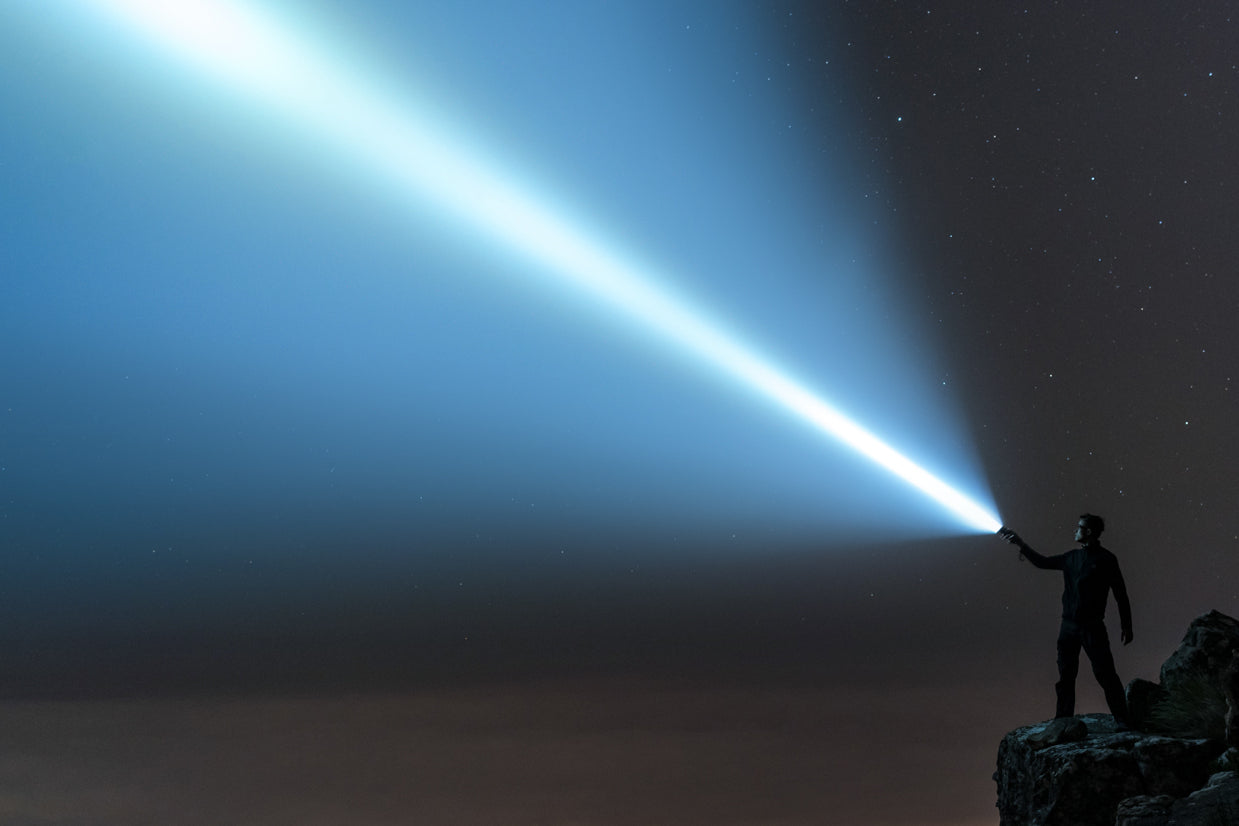
A better solution is Patented TIR (Total Internal Reflection) Lens Technology, which uses a specially designed optical lens to control the light path more efficiently. This design reduces the size of the flashlight head by up to 30 percent while doubling beam distance compared with older reflector-based designs of similar size. The result is a compact flashlight capable of reaching over 600 meters (around 656 yards). For hunters, this means a lighter, easier-to-handle rifle-mounted light that still provides the reach needed to scan fields, tree lines, or distant movement.
When tracking wounded game or scanning for predators, that extra beam distance can make a critical difference.
3. Extreme Brightness and Output Flexibility

Stealth is important, but sometimes maximum brightness is necessary. Hunters may need high output when moving through dense terrain, signaling a partner, or confirming a target before taking a shot. For this reason, we recommend that a professional hunting flashlight in 2026 should deliver over 2000 lumens in its highest white-light mode.
However, raw power alone is not enough. A good flashlight also offers multiple brightness levels, allowing hunters to adapt to different situations. Lower “Eco” modes are ideal for checking equipment or maps without destroying night vision, while “Turbo” modes provide instant full illumination when needed. Advanced LED technology such as the Luminus SFT70 helps deliver this flexibility.
Beyond brightness, beam shape also matters. The best predator hunting flashlights combine a tight center beam for long-distance visibility with useful peripheral lighting to maintain awareness of the surrounding area. This balanced beam design helps prevent “tunnel vision,” allowing hunters to focus on a target 200 yards away while still noticing movement nearby.
4. Tactical Stealth and Silent Operation
Imagine hiking several miles into the brush, hearing movement in the leaves, raising your rifle, activating your light, and then hearing a loud click echo through the still forest.
The predator is gone.
Silent operation is critical for predator hunting. High-quality hunting flashlights use tactical or near-silent switch mechanisms designed specifically for stealth. One of the most effective designs is the Dual Tail Switch system.
This configuration typically includes a primary tactical switch for instant activation along with a secondary control for switching brightness modes or color options. The design allows one-handed operation so hunters can move from off mode to Red High or White Strobe instantly without looking at the flashlight or changing grip.
The Dual Tail Switch system offers tactical advantage and convenience. Instant strobe activation can also serve as a defensive measure. A powerful flashing beam of up to 2500 lumens may temporarily disorient an approaching animal, giving hunters valuable time to react.
5. Rugged Durability and Power Reliability
The backcountry does not treat equipment gently. Rain, snow, mud, and freezing temperatures are all common challenges. If a flashlight fails because of water exposure or a battery loses power in the cold, the entire hunt can end early and the hunter could be exposed to dangerous elements with no visibility.
Durability Standards
Look for flashlights with an IP68 rating, which indicates full protection against dust and water immersion (at least up to 2 meters). The body should also be made from strong materials such as A6061-T6 aluminum, finished with a hard anodized coating that resists wear, recoil, and accidental drops.
Power Source
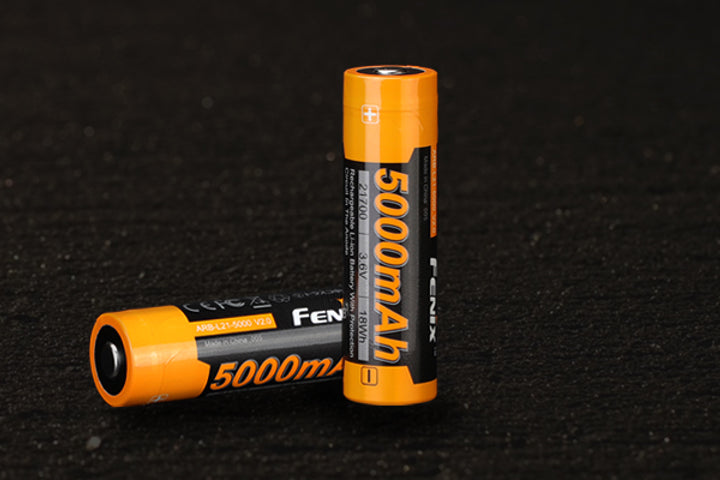
By 2026, the 21700 lithium-ion battery has become the standard for professional hunting flashlights. Compared with older 18650 batteries, 21700 batteries provide significantly higher capacity, often 5000mAh or more, without greatly increasing size. This allows for longer runtime, which is essential for extended nighttime hunts.
Modern flashlights also feature USB-C charging ports, allowing hunters to recharge from power banks, vehicles, or other portable power sources without carrying bulky charging equipment.
The Ultimate Solution for the Modern Hunter
Finding a flashlight that combines all these features, native colored LEDs, long-range TIR optics, durable construction, and silent tactical operation, can be challenging but the Fenix HT32 Hunting Flashlight with Red & Green Output stands at a high point in predator-hunting tech.
With a maximum output of 2500 lumens and a beam distance of 640 meters, the HT32 delivers exceptional performance. Its patented TIR lens technology allows for a compact head design while still achieving long-range illumination.
The flashlight features Luminus SFT20 CG and SFT20 RA LEDs, providing powerful green and red light directly from the source without filters. Combined with a silent dual tail switch system and IP68 waterproof protection, the HT32 is engineered to give hunters a serious advantage in the field.
Service and Support
We believe that purchasing a quality tool is only the beginning of a long partnership.
Our products include a limited lifetime warranty. If manufacturing defects occur, we provide repair service. After the free repair period, we continue to offer lifetime support with only the cost of replacement parts.
If you have questions about which flashlight best suits your hunting environment or style, feel free to drop us a line. Our team is always happy to assist fellow outdoor enthusiasts.
FAQ
Why are native red and green LEDs better than using filters on a hunting flashlight?
Native LEDs generate colored light directly, while filters block unwanted wavelengths to produce a specific color. Using a filter on a white LED can reduce output by 50 percent or more. Native LEDs maintain full brightness and beam distance, providing a stronger and clearer light for spotting game.
How does TIR lens technology improve flashlight range?
Traditional reflector systems require large, deep housings to project light long distances. Total Internal Reflection (TIR) lens technology uses optical precision to direct light more efficiently. This allows the flashlight head to be up to 30 percent smaller while increasing beam distance by as much as 100 percent.
Will the battery last during a cold night of hunting?
Yes, especially when using high-capacity 21700 lithium-ion batteries. These batteries often provide up to 5000mAh of capacity and maintain stable performance during extended use. Extremely cold temperatures can affect all batteries, so keeping spare batteries warm in a pocket is recommended during freezing conditions.


